HPE Networking Instant On
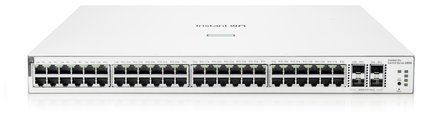
HPE Networking Instant On 1930 48G PoE 4SFP+ 370W Switch JL686B
- 48 x Gigabit
- 48 x PoE+
- 370 W
£654.99 inc VAT
SKU NE-EAP773 · MPN EAP773
In stock, ships in 1 working day
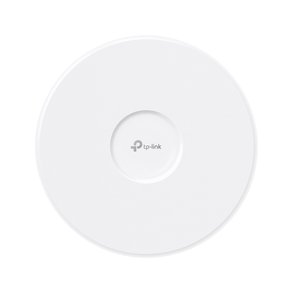
Tri-band Wi-Fi 7 ceiling access point with 320 MHz channels and up to 24 SSIDs, managed through Omada SDN for busy offices and hotels.
Buying for a hotel or business? Request a bulk quote
| Brand | TP-Link |
|---|---|
| Model | Omada EAP773 |
| Wi-Fi standard | Wi-Fi 7 (802.11be) on 5 and 6 GHz; Wi-Fi 6 (802.11ax) on 2.4 GHz |
| Location | Indoor |
| 2.4 GHz throughput | 573 Mbps |
| 6 GHz throughput | 5760 Mbps |
| MU-MIMO | Yes |
| Max SSIDs | 24 |
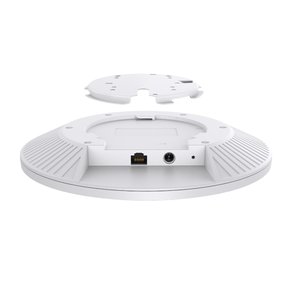
| Power | PoE listed; power supply not included |
| Weight | 1.34 kg |
| Box size (W x H x L) | 280 x 260 x 95 mm |
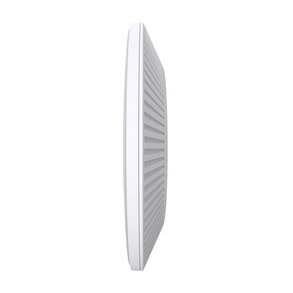
The TP-Link Omada EAP773 is a tri-band WiFi 7 access point for ceiling mounting in larger offices and high-traffic areas such as hotels and medical centres. It is aimed at sites where many devices need low-latency connections at the same time.
The EAP773 supports 320 MHz ultra-wide channels, 4096-QAM and Multi-RU, which the manufacturer says open up more usable channels and reduce latency under load. Multi-Link Operation lets devices communicate across several bands. The manufacturer rates the 6 GHz band at up to 5760 Mbps.
Up to 24 SSIDs can be created, which allows secure guest networks alongside staff networks with flexible access control. As part of the Omada software-defined networking family, it is managed centrally from one interface. The manufacturer notes that a power supply is not included, so plan for power separately.
Choose the EAP773 if you need top-tier WiFi 7 capacity on a ceiling and plan to run Omada. For lower-capacity alternatives, see our WiFi access points range. GGG Technologies can design the network and supply the right power for the unit.
No. The manufacturer states that the power supply is not included, so plan for power separately.
Up to 24 SSIDs can be set up, for example for staff, guests and operational networks.
Yes. It is part of the Omada software-defined networking family and is managed from one interface.