Shelly
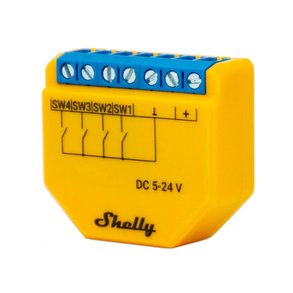
Shelly Plus Uni Smart WiFi Operated Module for Low-Voltage Applications
- Digital and analogue
- Yes
- WiFi
£13.99 inc VAT

SKU NE-SHELLY-1-CHANNEL-DECOUPLER-120V · MPN SHELLY-1-CHANNEL-DECOUPLER-120V
In stock, ships in 1 working day
Optocoupler decoupler that lets a 120V AC signal trigger smart device DC inputs, isolating AC from DC circuits for sensors and switches.
Buying for a hotel or business? Request a bulk quote
| Supply | 120V AC |
|---|---|
| Isolation | Optocoupler |
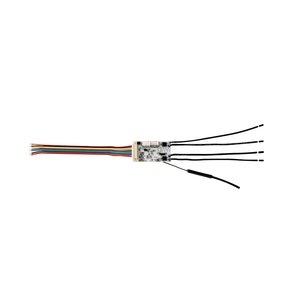
| Cables | 80 mm pre-wired, 5 mm stripped ends |
| Power consumption | Below 0.6W |
| Housing | Compact black |
The Shelly 1-Channel Decoupler 120V is an electronic component that safely connects separate AC and DC circuits. It uses an optical interface, known as an optocoupler, to isolate the two sides, so a standard 120V AC signal can trigger a DC input. It is useful when you need to link a mains-side switch or sensor to a low-voltage smart device.
The decoupler is designed for retrofitting existing installations and for integrating specialised external switches. It can be used with third-party sensors such as passive infrared, microwave, infrared motion and hand wave sensors, where those sensors work with AC to DC inputs. It is compatible with Shelly Plus Uni, Plus Add-On, Plus RGBW PM and Pro RGBW PM devices.
The unit has a compact black housing and pre-wired 80 mm cables with 5 mm stripped ends, which keeps installation quick. Its power consumption is below 0.6W, so it adds very little load to the system.
Choose this decoupler if your supply is 120V AC and you need to trigger a DC input from it. UK installations normally use 230V, so the 230V version may suit you better. Please check with a qualified electrician, and see our smart switches and dimmers or contact GGG Technologies for advice.
It isolates a mains AC circuit from a DC input and lets an AC signal trigger that input safely.
The product details list Shelly Plus Uni, Plus Add-On, Plus RGBW PM and Pro RGBW PM.
This version is for 120V AC. Check the supply voltage with an electrician, as UK installations normally use 230V.